 لغة
لغة
 English
 русский
 Español
 عربى
عربىSolar street lights work by capturing sunlight through an onboard photovoltaic panel during the day, storing that energy in a rechargeable battery, and automatically powering an LED light source through the night without any connection to the electrical grid. This self-contained design is why municipalities switching to solar street lighting can save upwards of 60% on electricity costs, according to research from the Lawrence Berkeley National Laboratory (cited in Market Research Future, 2026). The global market for solar street lights reflects this momentum, with industry estimates placing 2025 market value between $13 billion and $16 billion and forecasting continued double-digit annual growth through the early 2030s (Global Growth Insights, 2026; SNS Insider, 2025). This guide explains exactly how solar street lights function, which types and components matter most, how they compare to traditional grid-powered lighting, and what buyers should evaluate before investing in a solar lighting project.
محتوى
- 1 How Do Solar Street Lights Actually Work?
- 2 Which Types of Solar Street Lights Are Available?
- 3 Why Are Cities and Municipalities Switching to Solar Street Lights?
- 4 How Do Solar Street Lights Compare to Traditional Grid-Powered Street Lights?
- 5 What Factors Determine the Performance of a Solar Street Light?
- 6 What Should You Consider Before Installing Solar Street Lights?
- 7 Frequently Asked Questions About Solar Street Lights
- 7.1 Q: How long do solar street lights last before needing replacement?
- 7.2 Q: Do solar street lights work during cloudy or rainy weather?
- 7.3 Q: What battery type is best for solar street lights?
- 7.4 Q: Are solar street lights more expensive than traditional street lights?
- 7.5 Q: Why are LED solar street lights more popular than CFL-based systems?
- 7.6 Q: Can solar street lights be retrofitted onto existing poles?
- 8 Conclusion: Solar Street Lights Are Reshaping Public Infrastructure Worldwide
How Do Solar Street Lights Actually Work?
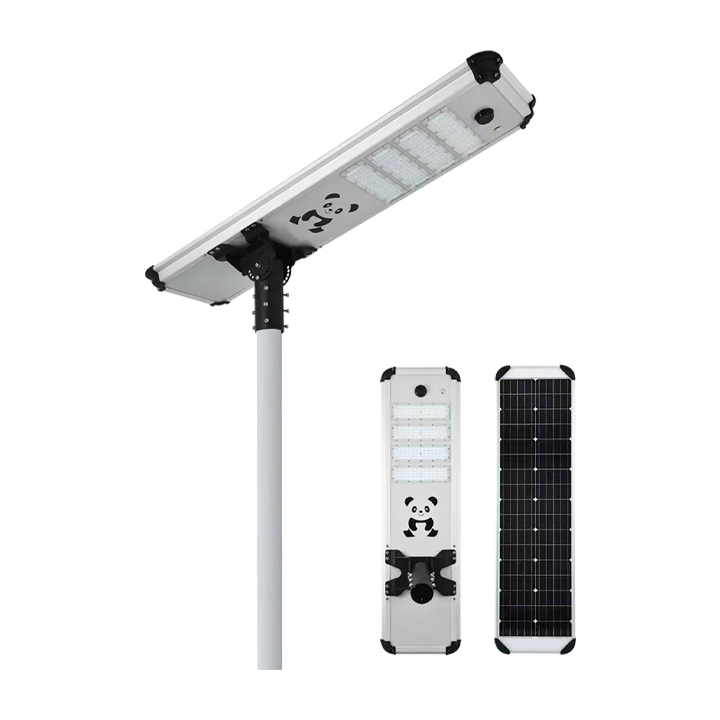
A solar street light functions as a complete, self-sufficient power system in a single pole-mounted unit, combining five core components that work together to capture, store, and release energy on a daily cycle.
- Solar panel (photovoltaic module): Mounted at the top of the pole or on an adjustable bracket, the panel converts sunlight into direct current electricity throughout daylight hours, with output varying based on panel size, efficiency rating, and local solar irradiance.
- Charge controller: This component regulates the flow of electricity from the solar panel into the battery, preventing overcharging and protecting the battery from damage. Modern systems increasingly use MPPT (Maximum Power Point Tracking) controllers, which optimize energy harvest even in partial sun or cloudy conditions (MarketsandMarkets, 2026).
- Battery storage: Energy collected during the day is stored in a rechargeable battery for use after dark. Lithium iron phosphate (LiFePO4) batteries have become the dominant choice, with industry data showing lithium-ion based chemistries used in roughly 70% of installations in 2025 (Business Research Insights, 2026).
- LED light source: The light-emitting diode converts stored electrical energy into visible light. LEDs dominate the solar street lighting market, accounting for approximately 72% of global installations due to their efficiency and lifespan advantages (SNS Insider, 2025; Coherent Market Insights, 2025).
- Sensors and controllers: Built-in light sensors (photocells) detect dusk and dawn to automatically switch the light on and off, while many modern units also include motion sensors that dim the light during periods of no activity to conserve battery power.
The Daily Operating Cycle
A solar street light completes a full charge-and-discharge cycle every 24 hours, charging during daylight and discharging through the night, with the battery sized to provide reliable lighting even through several consecutive cloudy days. During daylight hours, the solar panel charges the battery while the light remains off. As the built-in photocell detects falling light levels at dusk, the controller automatically activates the LED. Throughout the night, the system draws power from the stored battery charge, often using adaptive dimming or motion-sensing features to extend battery life during low-activity hours, before the photocell switches the light off again at dawn and the charging cycle restarts.
Which Types of Solar Street Lights Are Available?
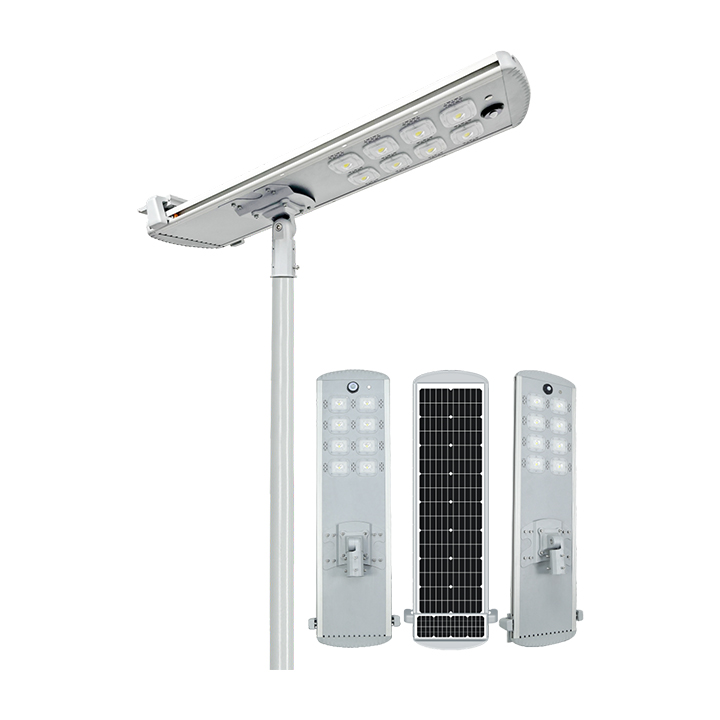
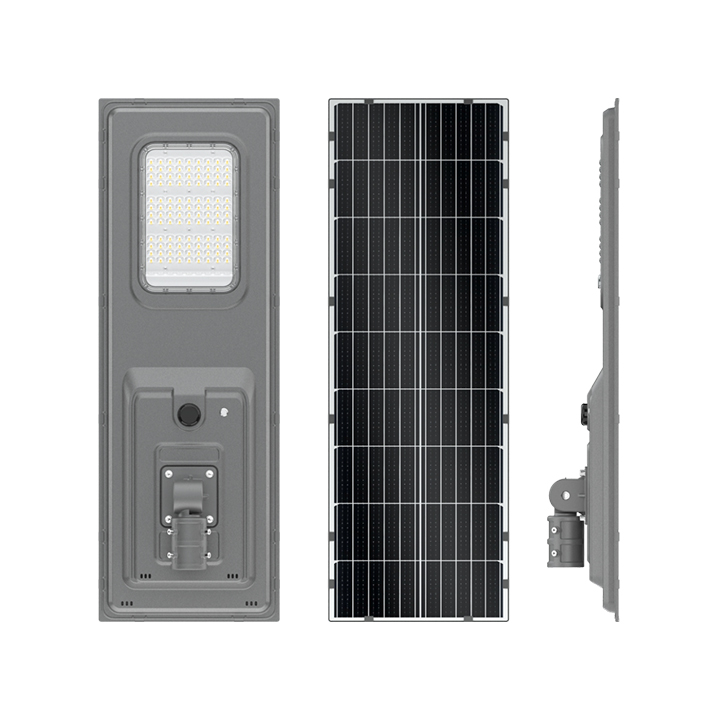
There are three primary configurations of solar street lights — all-in-one integrated units, split-type systems, and hybrid grid-tied systems — and the right choice depends on installation budget, maintenance access, and local climate conditions.
| Type | Design | Key Advantage | Best Suited For |
| All-in-one integrated | Panel, battery, LED, and controller combined in a single fixture | Lowest installation labor and wiring complexity | Most new municipal and residential installations |
| Split-type (standalone) | Battery housed separately, often underground or in a separate enclosure | Larger battery capacity; better performance in low-sun regions | Highways, rural roads, high-power-demand applications |
| Grid-connected hybrid | Solar-powered with grid backup for low-sun periods | Guaranteed uptime regardless of weather | Smart city projects with existing grid infrastructure |
Table 1: Comparison of the three primary solar street light system types, based on data from IndexBox (2026) and Coherent Market Insights (2025).
Why All-in-One Units Now Dominate New Installations
All-in-one integrated solar street lights now account for more than 55 to 60% of new installations in the United States, a shift driven by lower installation labor costs, reduced wiring complexity, and steadily improving battery and LED reliability (IndexBox, 2026). Because every component is housed in a single fixture mounted at the top of the pole, installation crews can mount an all-in-one unit in a fraction of the time required for a split-type system with separate underground battery enclosures — a meaningful advantage for municipalities managing large-scale rollouts across hundreds or thousands of poles.
Why Are Cities and Municipalities Switching to Solar Street Lights?
Cities are adopting solar street lights primarily to cut electricity costs, reduce dependence on grid infrastructure, and meet renewable energy and carbon-reduction targets — all while lowering long-term maintenance burdens.
Significant Electricity Cost Savings
Solar street lights eliminate ongoing grid electricity costs entirely for standalone systems, and research from the Lawrence Berkeley National Laboratory found that cities switching to solar lighting can save upwards of 60% on electricity costs compared to conventional grid-powered systems (cited in Market Research Future, 2026). Because standalone solar lights require no electrical infrastructure or ongoing utility payments, the savings compound directly: every light installed removes one more line item from a municipality's monthly electricity bill, an appeal that resonates strongly with budget-constrained municipal governments.
Reduced Infrastructure and Installation Costs
Standalone solar street lights require no trenching, no underground cabling, and no connection to the electrical grid, which substantially lowers both installation cost and project timeline compared to traditional wired streetlights. This is particularly valuable for rural and off-grid locations where extending grid infrastructure would be prohibitively expensive — a major reason that standalone systems led the market with a 61.4% share in 2025, owing specifically to their independence from the grid and ease of installation in remote areas (SNS Insider, 2025).
Government Policy and Renewable Energy Mandates
Government incentives and renewable energy mandates are a primary growth driver for solar street light adoption, with industry analysis noting that numerous countries have enacted renewable energy regulations, tax breaks, and subsidies specifically favoring solar-powered infrastructure (SNS Insider, 2025). In the United States, federal and state-level infrastructure spending — including funding tied to the Infrastructure Investment and Jobs Act (IIJA) — is projected to unlock between $800 million and $1.2 billion in solar street lighting procurement between 2026 and 2030 (IndexBox, 2026). Internationally, countries such as China, India, and the United Arab Emirates have prioritized energy-efficient solar street lighting within urban infrastructure projects specifically to reduce reliance on traditional electricity (SNS Insider, 2025).
Lower Long-Term Maintenance Requirements
LED-based solar street lights require substantially less ongoing maintenance than traditional lighting because LEDs have an exceptionally long operational lifespan exceeding 50,000 hours, dramatically reducing the frequency of bulb replacement (Business Research Insights, 2026; Coherent Market Insights, 2025). At a typical usage rate of four hours per night, a 50,000-hour LED lifespan translates to roughly 20 years of service before replacement is needed (Coherent Market Insights, 2025) — a maintenance interval that is simply unmatched by incandescent or older lighting technologies.
How Do Solar Street Lights Compare to Traditional Grid-Powered Street Lights?
Solar street lights outperform traditional grid-powered lighting on operating cost, installation flexibility, and resilience during power outages, while traditional grid lighting retains an edge in upfront unit cost and guaranteed output regardless of weather.
| Factor | Solar Street Lights | Traditional Grid-Powered Lights |
| Ongoing electricity cost | None for standalone systems | Continuous grid electricity expense |
| Installation requirements | No trenching or grid connection needed | Requires underground cabling and grid tie-in |
| Performance during power outages | Unaffected; battery-powered independence | Lights fail when grid power is lost |
| Upfront unit cost | Higher per-unit cost due to panel and battery | Lower upfront fixture cost |
| Reliability in low-sun regions | Depends on battery capacity and panel sizing | Consistent output regardless of weather |
| Carbon footprint | Minimal; renewable energy source | Dependent on grid's energy mix |
| Best for remote / off-grid areas | Strongly favored | Often impractical due to extension cost |
Table 2: Comparison between solar street lights and traditional grid-powered street lighting across key operational and cost factors.
What Factors Determine the Performance of a Solar Street Light?
Solar street light performance is determined by four interconnected factors — panel sizing, battery capacity, LED efficiency, and local solar irradiance — and undersizing any one of them compromises the entire system's reliability.
- Solar panel sizing: The panel must generate enough daily energy to fully recharge the battery, even accounting for seasonal variation in daylight hours and cloud cover. Larger panels or higher-efficiency monocrystalline cells compensate for regions with fewer average sunlight hours.
- Battery capacity: The battery must store enough energy to power the light through the longest expected nights, plus a buffer for consecutive cloudy or rainy days — typically engineered for 3 to 5 days of autonomy without sunlight in most commercial-grade systems. Lithium iron phosphate (LiFePO4) batteries represent the single largest cost component in a typical system, accounting for roughly 30 to 35% of total bill-of-materials (IndexBox, 2026).
- LED efficiency and lumen output: Higher-efficiency LEDs produce more light per watt of stored energy, directly extending how long a fixed battery charge can power the light at a given brightness level. LED-based solar street lights deliver over 60% higher energy savings compared to conventional lighting models (Global Growth Insights, 2026).
- Local solar irradiance: Geographic location fundamentally shapes system design — regions with high year-round sun exposure can use smaller panels and batteries, while northern latitudes or areas with frequent overcast conditions require larger components to maintain reliable nighttime operation.
The Growing Role of Smart Controls
An increasing share of new solar street light installations now include smart, IoT-enabled features such as motion sensing, adaptive dimming, and remote monitoring — capabilities that directly improve energy efficiency and extend system lifespan. In the United States, more than 30% of new solar street light tenders now require integrated IoT capabilities, including remote monitoring, adaptive dimming, motion sensing, and data collection for traffic or air quality analytics (IndexBox, 2026). These features allow a light to dim to a low standby level when no motion is detected and brighten instantly when a pedestrian or vehicle approaches, conserving battery energy during quiet hours without sacrificing safety when it matters.
What Should You Consider Before Installing Solar Street Lights?
Before installing solar street lights, evaluate local sunlight availability, required lighting duration, expected battery autonomy during poor weather, and whether a standalone or grid-hybrid configuration best fits the site's reliability requirements.
- Assess average daily sunlight hours at the installation site: Locations with consistently high solar irradiance can use smaller, less expensive panel and battery configurations, while cloudier regions need oversized components to guarantee reliable performance through winter months and extended overcast periods.
- Determine the required nightly operating hours: A residential side street with shorter operating windows has different battery requirements than a major highway interchange that must remain fully lit all night, every night, regardless of conditions.
- Decide between standalone and hybrid grid-tied designs: Standalone systems offer maximum installation flexibility and zero ongoing electricity costs but depend entirely on solar charging, while grid-hybrid systems sacrifice some of that independence for guaranteed uptime, which may be necessary for critical safety corridors.
- Evaluate battery chemistry and expected lifespan: Lithium iron phosphate (LiFePO4) batteries are increasingly the industry standard due to their long cycle life, safety profile, and stable performance across temperature extremes, generally justifying their higher upfront cost compared to older battery chemistries.
- Consider smart features for high-traffic or budget-sensitive deployments: Motion-sensing and adaptive dimming can meaningfully extend battery life and reduce the frequency of maintenance visits, an increasingly common requirement in new municipal tenders.
Frequently Asked Questions About Solar Street Lights
Q: How long do solar street lights last before needing replacement?
A quality solar street light with an LED source can last approximately 20 years of nightly operation before the LED itself requires replacement, based on a typical 50,000-hour LED lifespan at roughly four hours of use per night (Coherent Market Insights, 2025). The battery, however, generally requires replacement well before the LED does — most lithium-based batteries used in solar street lighting are rated for several years of daily charge-discharge cycles before capacity noticeably degrades, making the battery the more frequent maintenance item in a well-designed system.
Q: Do solar street lights work during cloudy or rainy weather?
Yes — solar street lights are engineered with battery autonomy specifically to bridge multiple consecutive days of poor sunlight, typically designed to operate reliably for 3 to 5 days without significant solar charging. Solar panels still generate some charge even on overcast days, just at a reduced rate compared to direct sunlight, and a properly sized system accounts for the region's worst-case seasonal weather patterns rather than assuming ideal sun exposure every day.
Q: What battery type is best for solar street lights?
Lithium iron phosphate (LiFePO4) batteries are widely considered the best choice for solar street lights, currently used in approximately 70% of installations as of 2025, due to their long cycle life, stable performance in temperature extremes, and improving cost-effectiveness (Business Research Insights, 2026). Older lead-acid batteries remain in use in some budget-sensitive or legacy installations, but they generally offer a shorter usable lifespan and reduced performance in cold weather compared to lithium-based alternatives.
Q: Are solar street lights more expensive than traditional street lights?
Solar street lights typically carry a higher upfront unit cost than traditional grid-powered fixtures because the price includes the solar panel, battery, and charge controller — but they eliminate ongoing electricity costs entirely, which research indicates can produce savings upwards of 60% over the system's lifetime compared to grid-powered lighting (cited in Market Research Future, 2026). For installations in remote or off-grid locations, solar lights are often dramatically cheaper overall once the avoided cost of extending grid infrastructure and ongoing utility bills is factored in.
Q: Why are LED solar street lights more popular than CFL-based systems?
LED-based solar street lights dominate the market with roughly 72% of global installations because they offer significantly longer lifespan, lower power consumption, and over 60% higher energy savings compared to CFL alternatives (SNS Insider, 2025; Global Growth Insights, 2026). CFL-based systems remain in use mainly in price-sensitive markets and rural areas of emerging economies, where their lower upfront manufacturing cost makes them more accessible despite the long-term efficiency disadvantage compared to LED technology.
Q: Can solar street lights be retrofitted onto existing poles?
Yes — all-in-one integrated solar street lights are specifically designed for straightforward retrofit installation onto existing poles, since the entire system (panel, battery, controller, and LED) is housed in a single fixture that mounts at the top without requiring new underground wiring. This retrofit-friendly design is a major reason all-in-one units now account for the majority of new installations in markets like the United States, where municipalities are converting existing infrastructure rather than building entirely new lighting networks (IndexBox, 2026).
Conclusion: Solar Street Lights Are Reshaping Public Infrastructure Worldwide
Solar street lights have moved from a niche, off-grid solution to a mainstream infrastructure choice, driven by proven electricity cost savings of up to 60%, declining battery and panel costs, and increasing government support for renewable energy adoption.
The fundamentals are straightforward: capture sunlight during the day, store it efficiently in a lithium-based battery, and release it through a highly efficient LED at night — all without a single connection to the electrical grid. What has changed in recent years is the sophistication layered on top of those fundamentals: MPPT charge controllers that extract more energy from limited sunlight, motion sensors that stretch every stored watt further, and IoT connectivity that lets city planners monitor entire lighting networks remotely.
With global market estimates ranging from roughly $13 billion to nearly $16 billion in 2025 and most forecasts projecting double-digit annual growth through the early 2030s (Global Growth Insights, 2026; SNS Insider, 2025; Coherent Market Insights, 2025), solar street lighting is positioned to remain one of the fastest-growing segments of public infrastructure investment for years to come — a rare case where the more cost-effective option for cities is also the more sustainable one.